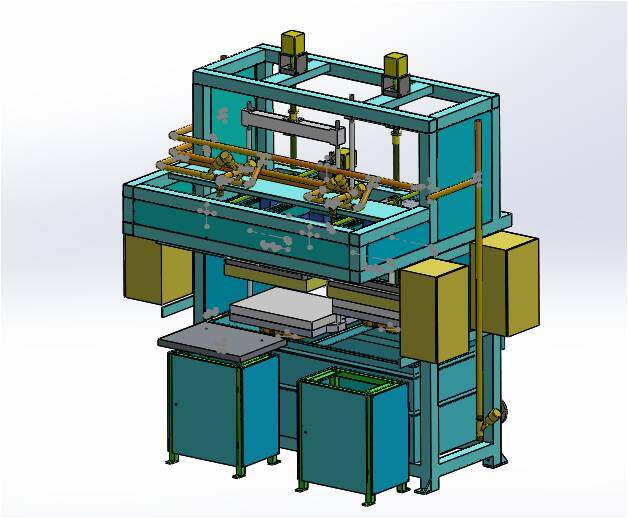

The mold cost is the most expensive expense in pulp tray production. A set of properly maintained molds lasts 2 to 3 times longer than those without maintenance. A mold set requires hourly upkeep, batch inspections, and periodic overhauls.
A well-designed mold management system includes the following:
Every 8 hours
Forming Mold cleaning
Complete before each shift handover, ensure the vacuum holes are unobstructed, and the forming thickness deviation is ≤0.1mm
every 3 days
Hot pressing mold cleaning
Remove residual fibers and adhesive from the mold surface to prevent sticking during hot pressing and surface defects
once a week
Ultrasonic deep cleaning
Remove deep blockages from mesh blind spots and restore the original air permeability of the mold
Every 5,000 times
Aperture detection
Precisely measure the wear of the aperture. If it exceeds the tolerance, immediately repair the mold to prevent batch deviations
Real-time logging
Cleaning records are accurate to the hour
Customers can access it at any time, with every mock examination traceable, replacing transparency with trust
What would happen if a set of molds were used until they were scrapped without any cleaning, maintenance, or upkeep in between?
within the past 24 hours
Sample making stage
The mold is in good condition, with a yield rate of over 90%, and the products are of high quality. The samples delivered to the customer were produced at this stage.
Day 3
Hidden dangers begin to emerge
The vacuum holes began to clog, causing deviations in local thickness, and the yield rate dropped to 78%. Workers started sorting the goods—sending the good ones to customers and hiding the defective ones.
At this point, the workers began manually sorting the products, shipping the good ones and piling the defective ones in the corner. "Sorting" concealed the problems but also meant the scrap rate had spiraled out of control.
Day 5
Quality collapse
The mold hole is half blocked, causing a vacuum level drop of over 30%. Products molded with the same die exhibit thickness variations—1.5mm in thick areas and 0.9mm in thin areas. The yield rate has fallen to 60%.
For products produced from the same mold, the thickness deviation reached 0.6mm (1.5mm vs 0.9mm), exceeding three times the industry-allowed tolerance.
Day 7
customer churn
The customer complained about inconsistent product quality upon arrival. The factory responded, "This is the nature of paper and plastic—fluctuations are inherent in natural materials." Yield rate ≈ losing customers
The truth
It's not that "natural materials fluctuate," but that the mold hasn't been cleaned for half a month. For the same material, with properly maintained molds, the yield rate remains stable at over 92%.